Beyond Morioh: Unpacking the Hidden Horror and Meta-Commentary of Thus Spoke Rohan Kishibe
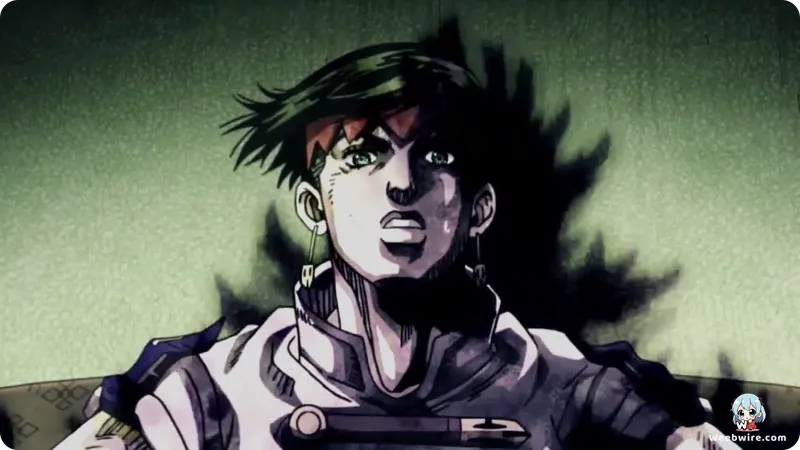
While fans primarily recognize Rohan Kishibe as the idiosyncratic, fashion-forward manga maestro from JoJo's Bizarre Adventure: Diamond is Unbreakable, his distinct spin-off, Thus Spoke Rohan Kishibe (Kishibe Rohan wa Ugokanai), stands as a masterful exploration of psychological horror and deeply embedded esoteric trivia. Far from being a mere extension of the Joestar saga, this collection of self-contained narratives, expertly adapted into OVAs by David Production, operates outside the main JoJo timeline. This freedom allows the series to delve into unique storytelling structures and production methodologies that warrant critical examination. The very genesis and format of this spin-off represent a fascinating piece of industry trivia.
The Genesis and Unique Format
Unlike the expansive, action-packed chronology of the main series, Thus Spoke Rohan Kishibe presents a series of unsettling vignettes. These stories typically chart the experiences of ordinary individuals who stumble upon extraordinary and often terrifying supernatural phenomena. The original material, penned and illustrated by the legendary Hirohiko Araki, began its life sporadically in 1997, predating the Part 4 anime by decades. These stories were initially disseminated across an array of unconventional manga publications, including Shueisha's Jump Square and even the high-end fashion magazine Spur. This fragmented and unusual publishing history ensured that each tale was inherently designed to be self-sufficient and tonally distinct, emphasizing a palpable atmosphere of psychological dread over the typical fanfare of shonen action.
Rohan Kishibe as Araki’s Alter Ego
A central piece of enduring trivia revolves around Rohan himself: many aficionados view him as Araki’s definitive alter ego. Though Araki himself has refuted a direct parallel, Rohan’s zealous dedication to absolute realism, his fearless pursuit of inspiration regardless of personal peril, and his famous assertion that 'reality is the greatest source of entertainment' strikingly mirror Araki’s acclaimed work ethic and philosophical approach to crafting manga.
Rohan’s signature Stand, Heaven’s Door (a reference to Bob Dylan's 'Knockin' on Heaven's Door'), which transforms people into readable books, functions as a powerful meta-commentary on the artistic process. The insight here is realizing Heaven’s Door is less a combat ability and more a symbolic instrument of invasive research. The artist must metaphorically 'read' and sometimes 'rewrite' reality to forge compelling narratives. This explains why the spin-off favors investigation and ethical dilemmas over conventional battles, allowing Rohan to survive encounters like the 'Millionaire Village' or the 'Confessional Room' using cunning rather than brute force.
The Production Journey of the OVAs
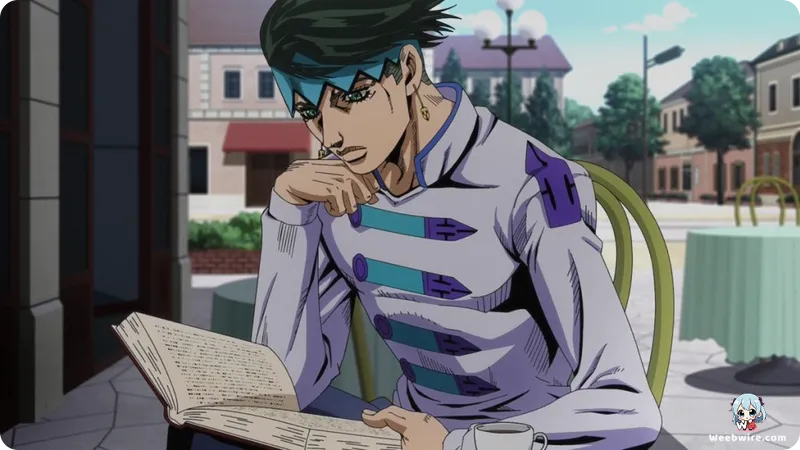
The production journey of the anime OVAs offers equally compelling trivia. David Production, the studio behind the entire contemporary JoJo serialization, intentionally adopted a radically different visual and auditory approach for Thus Spoke Rohan Kishibe. While Diamond is Unbreakable embraced vibrant pop colors and a blend of slice-of-life charm and action, the OVAs embraced a far more muted, often monochromatic, and distinctly sinister aesthetic. The deliberate use of darker palettes, amplified shadows, and sparse sound design emphasizing environmental horror served to faithfully capture the pure horror essence of Araki’s original one-shots.
This conscious tonal separation underscores the studio’s dedication to honoring Araki’s multifaceted styles. Furthermore, the OVAs were initially distributed in a highly exclusive manner, often bundled with special edition manga or limited event screenings, cultivating their status as prized collector's items prior to their eventual global streaming release.
Enduring Success and Live-Action Adaptation
Finally, the series’ enduring success is evidenced by its critically lauded live-action adaptation. While live-action versions of niche anime spin-offs frequently face intense scrutiny, the Japanese drama series, starring Issey Takahashi, garnered widespread praise for flawlessly translating the detached, meticulous, and eerie ambiance of Araki’s source material. The triumph of this adaptation, which skillfully maintained the episodic, mystery-driven format, powerfully attests to the strength and adaptability of the core narrative. It firmly established that Rohan Kishibe's profound appeal extends beyond the action-heavy sphere of JoJo, cementing its legacy as a sophisticated, mature mystery series in its own right.