Nichijou's Unseen Expense: Unpacking the Movie-Quality Animation and Cult Status of KyoAni's Surreal Masterpiece
9 months ago
Share this news:
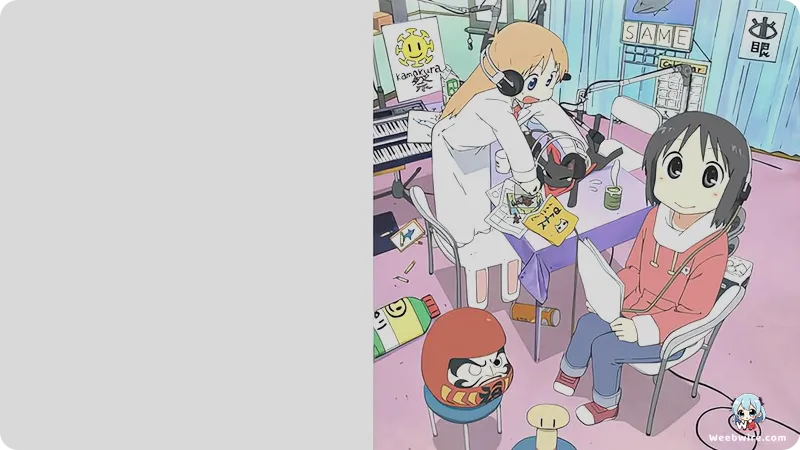
Despite its deceptively simple title, Nichijou - My Ordinary Life is anything but mundane, standing as a landmark in surreal comedy. Conceived by creator Keiichi Arawi and brought to explosive visual life by the acclaimed production house Kyoto Animation (KyoAni) in 2011, the series has earned its status as a global cult classic. Its unique comedic power stems from a radical production choice: deploying animation quality typically reserved for major action films onto the most trivial and absurd daily occurrences. This deliberate over-animation of the ordinary is the hallmark of Nichijou's humor and represents an extraordinary commitment of budget and artistic talent.
KyoAni, famed for its exceptionally fluid and high-standard production values, faced the challenge of adapting a four-panel gag manga often characterized by basic, blocky art. Rather than conforming to the source material's visual economy, the studio dramatically escalated the visual stakes. Fans frequently cite the term 'sakuga' to describe these moments of exceptional dynamism which are rendered with the precise choreography and intensity expected of epic battles. This signature technique of treating every gag like a dramatic climax required significant investment, surprising many industry observers given the show’s slice-of-life genre.
The pinnacle of this dedication remains the now-legendary Principal vs. Deer confrontation. This brief, minute-long sequence features intricate, dynamic choreography, hyper-realistic animal movement, and detailed environmental physics, all executed flawlessly. It demanded far more planning and keyframe work than typical comedy scenes, solidifying KyoAni's commitment to Arawi's whimsical vision and transforming simple manga panels into unforgettable visual spectacles, which is arguably why the anime achieved global success beyond the original manga readership.
Key Character Details: Nano and Hakase
Beyond the visuals, the series is rich with character trivia. Consider Nano Shinonome, the high school student secretly built as a robot by the genius inventor Hakase. Nano’s defining feature is the prominent, oversized wind-up key protruding from her back, a running gag tied to her desperate attempts to appear normal. A fascinating, lesser-known detail is the key’s explicitly stated lack of function; Hakase designed it purely for decoration, underscoring the series’ illogical charm.

Speaking of Hakase, the 'Professor' is surprisingly only eight years old. This humorous contradiction sees her managing an entire household and creating complex robotics while simultaneously exhibiting typical childlike behavior, such as demanding snacks and obsession with sharks.
While initially serialized in Shonen Ace before moving to Gekkan Shonen Ace, the anime adaptation faced a tough start. Despite immense critical praise and KyoAni's expensive production, Nichijou was initially a commercial disappointment in the Japanese home video market, recording notably low sales figures compared to its contemporaries. However, its strange, meme-worthy humor and visual excellence eventually found a massive global audience through streaming and international distribution, cementing its status as an enduring cultural phenomenon and demonstrating how true originality can sometimes require time to find its dedicated fans.