
Back to Anime List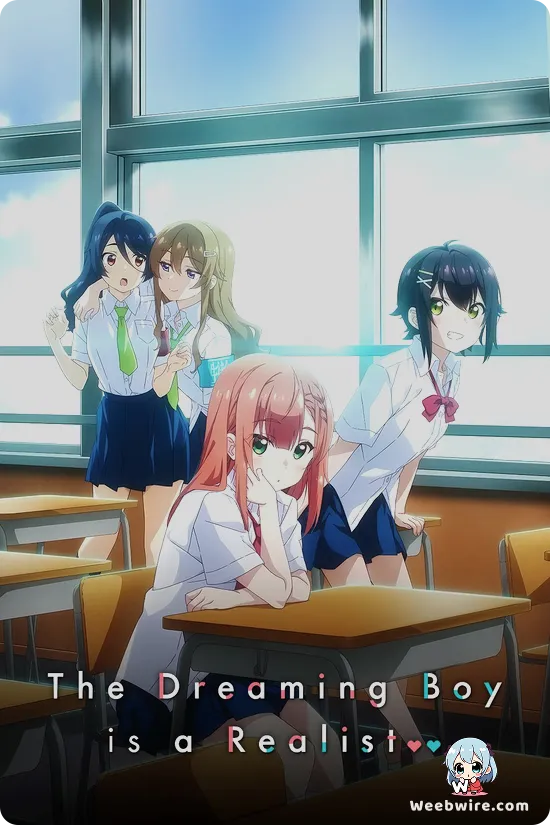
© Studio Gokumitv.apple.com
Overview
The Dreaming Boy is a Realist (Yumemiru Danshi wa Genjitsushugisha) is a sophisticated romantic comedy series that delves into the psychological and emotional complexities of high school relationships and individual self-perception. The narrative is centered around Wataru Sajou, a typical high school student who harbors an intense, almost obsessive admiration for his stunningly beautiful and academically gifted classmate, Aika Natsukawa. Wataru's life has revolved around persistent, if often ignored, romantic advances toward Aika, driven by a simple past kindness she showed him. The primary conflict arises when Wataru undergoes a sudden moment of profound introspection and self-doubt. Concluding that he is utterly unworthy of Aika’s perceived perfection, he resolves to drastically alter his behavior, abandoning his pursuit and adopting a more 'realistic' distance from her. Set primarily within the mundane yet crucial environment of a modern Japanese high school, the story masterfully explores themes of self-acceptance, genuine communication, and the often-misleading nature of external appearances. This sudden shift puzzles and eventually intrigues Aika, who had grown accustomed to Wataru's constant attention. As Wataru focuses on developing deeper friendships and personal independence, Aika begins to react unexpectedly to his absence, leading to a series of humorous and heartwarming misunderstandings that push both characters toward genuine self-discovery and potentially, a true connection that transcends idealistic infatuation. The supporting cast, including Wataru's close friends and family, plays a crucial role in highlighting the nuances of adolescent development.
Opinion
The adaptation of The Dreaming Boy is a Realist by Studio Gokumi delivers a visually competent and emotionally grounded viewing experience, distinguishing itself through its commitment to realistic character psychology rather than typical genre tropes. The animation quality is consistently solid, utilizing a bright, inviting color palette suitable for a slice-of-life setting. Character designs are expressive, particularly in conveying the subtle shifts in emotion experienced by Wataru and Aika as they navigate their internal conflicts. Pacing is deliberate; while this allows for excellent exploration of character introspection and thematic depth, some sections may feel slow to viewers accustomed to faster-paced romantic comedies. The strength of the series lies heavily in its voice acting. Natsuki Hanae (Wataru Sajou) and Aoi Yūki (Aika Natsukawa) provide nuanced performances that perfectly capture the awkwardness, insecurity, and underlying sincerity of their characters. Hanae’s portrayal of Wataru’s existential crisis regarding his self-worth is particularly effective and carries significant emotional weight. The thematic depth revolves around realism versus idealism in relationships and the necessity of self-respect before seeking external validation. The narrative avoids easy resolutions, demanding that characters genuinely grow, making the eventual payoff feel earned. Overall, while not groundbreaking in animation technique, the anime succeeds entirely on the merits of its relatable screenplay and strong emotional performances, making it a mature and thoughtful entry into the romance genre.
Characters
Kei Ashida
Voice: Yūki Kaji
Kaede Sajou
Voice: Rie Takahashi
Aika Natsukawa
Voice: Aoi Yūki
Wataru Sajou
Voice: Natsuki Hanae
Rin Shinomiya
Voice: Ayane Sakura
Credits
Studio
Studio Gokumi
Cover Art
Mizore Saba
Publisher
Kadokawa
Producers
Kadokawa, AT-X, BS11
Episodes
Season 1
12 episodesInformation
StatusCompleted
Total Episodes12
Duration24 min
Rating7.2
ReleasedSummer 2023
Seasons1
Genres
ComedyRomanceSlice of Life



Ready to Watch?