© MADHOUSEwww.crunchyroll.com
Overview
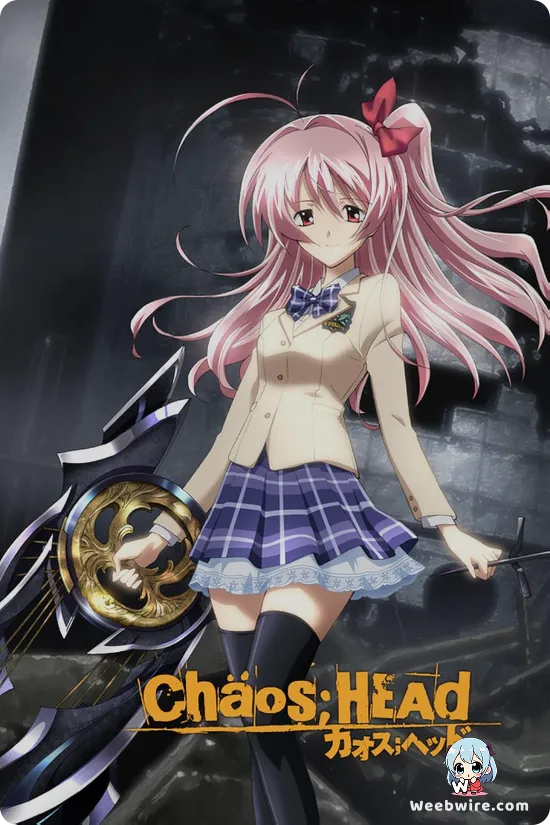
Set in the vibrant Shibuya district of Tokyo in 2009, ChäoS;HEAd is a compelling psychological thriller anime adaptation of the visual novel from the esteemed Science Adventure series. The narrative centers on Takumi Nishijou, a deeply introverted high school student who identifies as a hikkikomori, preferring the solitude of his cargo container dwelling and the escapism of online gaming and anime over real-world social interaction. Takumi's isolated existence is violently disrupted when he encounters disturbing imagery online from a user known only as 'Shogun.' These images depict the gruesome aftermath of the 'New Generation' (New Gen) serial murders, showcasing victims impaled on stakes with their brains exposed. Overwhelmed by paranoia, Takumi becomes convinced he is the next target, leading him into a terrifying spiral of vivid hallucinations and delusions that relentlessly blur the boundaries between what is real and what is imagined, a condition potentially exacerbated by his latent schizophrenia. As the New Gen murders escalate, Takumi finds himself under police suspicion and becomes entangled with a diverse cast of peculiar individuals. Among them are the Gigalomaniacs, a select group capable of manifesting their delusions into tangible reality through a process known as 'realbooting.' This enigmatic group includes the seemingly innocent Rimi Sakihata, a girl with a peculiar fascination for frogs; Ayase Kishimoto, a popular school idol with a hidden, darker side; Nanami Nishijou, Takumi's fiercely protective younger sister; Kozue Orihara, a seemingly catatonic patient mysteriously connected to the unfolding events; Sena Aoi, a brilliant but exceptionally arrogant scientist; and Yua Kusunoki, a kind-hearted senior student. These 'insane anime girls with swords' wield specialized weapons called DI-Swords, instruments forged from their own deeply held delusions, as they navigate a complex web of conspiracies. Their struggle involves entities such as Project Noah and Noah II—a satellite weapon designed to induce mass delusions—and powerful, shadowy organizations like the Committee of 300. The anime's 12 episodes meticulously explore profound themes of perception, the fluidity of identity, and the inherent dangers of unchecked technological advancement. Shibuya's iconic scramble crossing transforms into a chaotic battleground, beset by unnatural earthquakes and apocalyptic visions during the terrifying 'Second Melt.' Takumi must unearth the truth behind the New Gen killer, confront formidable antagonists like Gen'ichi Norose, and ultimately synchronize his own delusions with those of his allies to avert impending catastrophe. The series is notable for its meta-commentary on otaku culture, its innovative science fiction concepts such as the Dirac Sea and the Ir2 equation, and its multiple endings, which echo the branching narrative paths of the original visual novel. These endings force Takumi into an existential choice between self-sacrifice and a chance at survival alongside Rimi. Produced by the renowned MADHOUSE studio, ChäoS;HEAd delivers a consistently tense atmosphere, punctuated by shocking plot twists and profound philosophical questions about the nature of reality in a world increasingly consumed by delusion.
Opinion
ChäoS;HEAd presents itself as a daring, albeit imperfect, exploration of the psychological thriller genre, successfully translating the visual novel's descent into intense paranoia while showcasing MADHOUSE's distinctive animation style. The narrative excels in constructing an almost unbearable sense of tension, largely through Takumi's fragmented perspective, masterfully blurring the lines between his subjective reality and objective delusion to fully immerse the viewer in his fractured mental state. The series grapples with profound themes of social isolation, the inherent unreliability of perception, and the significant perils associated with unchecked technological advancement. Its exploration of mass hysteria induced by the Noah II satellite weapon feels particularly prescient, resonating with contemporary concerns about misinformation. The New Gen murders serve as a potent and disturbing narrative catalyst, evolving into a complex, conspiracy-driven plot where the introduction of Gigalomaniacs and their unique powers adds a compelling layer of supernatural intrigue to the science fiction underpinnings, making the battles of the mind visually engaging through the use of DI-Swords and 'realbooting' sequences. Takumi's character development is a significant strength, charting a compelling arc from his initial state of pathetic social withdrawal to becoming a reluctant, albeit flawed, protagonist. This journey effectively humanizes the otaku stereotype without excusing his more negative traits. The supporting cast offers dynamic contrasts: Rimi Sakihata's apparent whimsicality conceals a deeper complexity, while Sena Aoi's intellectual arrogance often drives the plot's conflicts. However, some characters, such as Ayase Kishimoto, occasionally lean towards archetypal portrayals. The animation quality is a standout feature, with MADHOUSE's characteristically fluid style enhancing the moody depiction of Shibuya's nocturnal cityscape and the grotesque, unsettling visuals of the murder scenes, amplifying the horror elements. The deliberate pacing, facilitated by 27-minute episode runtimes, allows for the gradual build-up of atmosphere and dread. Furthermore, the sound design significantly contributes to the overall unease, from subtle hallucinatory whispers to the pulsating original soundtrack that underscores climactic moments of delusion synchronization. Nevertheless, the anime adaptation encounters limitations, primarily due to the challenge of condensing the visual novel's intricate branching narrative paths. This compression results in the omission of certain crucial plot details, which subsequently dilutes the impact of key twists and the overall emotional payoff, leading to resolutions that can feel somewhat rushed and polarizing endings. The pacing occasionally falters in the earlier episodes, bogged down by exposition related to otaku culture, and the graphic nature of the violence may prove off-putting for more sensitive viewers. Despite these criticisms regarding its execution when compared to the source material, ChäoS;HEAd remains a significant and impactful work for fans of the Science Adventure series, laying the groundwork for themes later explored in Steins;Gate. Ultimately, it delivers a mind-bending and thought-provoking experience that lingers long after viewing, rewarding patient audiences with intellectual stimulation and a pervasive sense of existential dread, although purists of the visual novel might find the original experience more satisfying. Its enduring cult status is a testament to its unique ability to dissect human fragility amidst overwhelming chaos.
Characters
Takumi Nishijou
Voice: Akira Ishida
Rimi Sakihata
Voice: Kana Asumi
Ayase Kishimoto
Voice: Yui Horie
Nanami Nishijou
Voice: Eri Sendai
Kozue Orihara
Voice: Rie Kugimiya
Sena Aoi
Voice: Yukari Tamura
Yua Kusunoki
Voice: Shiho Kawaragi
Credits
Studio
MADHOUSE
Cover Art
N/A
Publisher
Nitroplus
Producers
MAPPA, ANIK Inc.
Episodes
Season 1
12 episodesInformation
Genres
Related Anime
Gintama.: Slip Arc
Mob Psycho 100 III
SPY x FAMILY Cour 2
Demon Slayer: Kimetsu no Yaiba Mugen Train Arc
Demon Slayer: Kimetsu no Yaiba Entertainment District Arc